Time:
Muffle furnaces are widely used in laboratories due to their high measurement and control accuracy, energy efficiency, stable and reliable performance, ease of operation, and high degree of automation. Therefore, temperature uniformity is a core indicator for muffle furnaces, and our company, Saftherm, has made numerous technical improvements to address this issue. Temperature uniformity refers to the consistency of temperature across different locations within the working area of the muffle furnace chamber at the same time. In short, it's the "uniformity" of the actual temperature inside the furnace, typically quantified as "furnace temperature uniformity."
Why is temperature uniformity of a muffle furnace crucial?
Temperature uniformity of a muffle furnace directly affects experimental results and product quality, and is one of the core parameters for evaluating muffle furnace performance.
1. Ensuring accurate and repeatable results: Scientific experiments require reproducible results. If the temperature difference within the furnace is too large (e.g., 900°C on one side, only 870°C on the other), the sample experiences different "thermal histories," leading to unreliable and unrepeatable experimental data.
2. Determining the final material properties: In processes such as annealing, sintering, and heat treatment, a deviation of a few degrees can alter the microstructure of metals or ceramics, resulting in internal stress, uneven hardness, or incomplete sintering, rendering the product unusable.
3. Compliance with specific industry standards: In fields such as aerospace, certification requirements such as Nadcap must be followed. Equipment must pass rigorous temperature uniformity testing (TUS) and system accuracy testing (SAT) before being put into use.
How to ensure and improve the temperature uniformity of a muffle furnace?
To ensure the temperature uniformity of our muffle furnaces, we will focus on five design dimensions: heating element layout, furnace structure and materials, insulation design, airflow organization, and zone control to guarantee the temperature control accuracy of our Saftherm muffle furnaces.
I. Heating Element Layout Optimization (Core Design)
Design Highlights
Multi-faceted Uniform Arrangement: Abandoning single-sided heating, we adopt a symmetrical arrangement around the perimeter and top and bottom to form a three-dimensional radiative heat field, eliminating unidirectional temperature differences.
Element Spacing and Power Density Matching:** Elements are denser and have slightly higher power in the edge areas to compensate for boundary heat loss; sparser elements are used in the central area to avoid overheating.
Independent Zone Temperature Control: The furnace is divided into five zones: top, bottom, left, right, and rear. Each zone is equipped with an independent PID controller to dynamically balance the power of each zone.
II. Furnace Structure and Refractory Material Design
Design Highlights
Geometric Shape Optimization: Cylindrical/cubic furnaces are preferred to reduce "cold zones" at rectangular corners; rounded corners and reflective baffles enhance radiative heat transfer. High-radiation, low-heat-storage lining: Utilizing high-purity alumina fiber (95% Al₂O₃) or mullite lightweight bricks, with low thermal conductivity (0.15–0.25 W/m・K) and high emissivity (ε>0.85), rapidly achieving a uniform radiant wall temperature.
Integrated molded furnace lining: Reducing gaps in refractory brick joints to avoid localized heat leakage and uneven temperature distribution.
III. Multi-layer gradient insulation system design
Design Considerations
Gradient insulation structure: The inner layer (furnace side) uses low thermal conductivity fiber (1260℃ grade), the middle layer uses medium-density insulating bricks, and the outer layer uses microporous calcium silicate, forming a "high inner, low outer" thermal resistance gradient to reduce radial heat loss.
Enhanced insulation in heat-loss areas: High heat-loss areas such as furnace doors, furnace openings, and wiring holes have a 20%–30% thicker insulation layer, and a labyrinth seal is used to block heat leakage.
Uniform Temperature Design of the Outer Shell: A reflective aluminum foil layer and a thin steel plate uniform temperature layer are applied to the inner side of the outer shell to reduce localized hot spots and minimize environmental temperature interference.
IV. Airflow Organization and Forced Convection Design (Key for High-Temperature/Large Furnaces)
Design Considerations
Natural Convection Optimization: The furnace height-to-width ratio is controlled at 1.2–1.5, slightly wider at the bottom and slightly narrower at the top, promoting uniform upward movement of hot air and suppressing vortex dead zones.
Forced Circulation System (High-End Models): High-temperature centrifugal fans (resistant to 1200–1400℃) are installed at the rear/top of the furnace to create a "top suction - back blowing - bottom return" circulating airflow, controlling the temperature difference within **±1–2℃.
Guide Plate Design: Perforated ceramic guide plates are installed on the inner side and corners of the furnace door to disperse vortices and guide airflow to uniformly cover the entire working area.
V. Multi-Point Feedback and Intelligent Temperature Control Design
Design Highlights
Multiple Thermocouple Placement: S-type/B-type thermocouples are placed at six points in the furnace: top, middle, bottom, left, right, and center, to collect three-dimensional temperature field data in real time.
PID + Fuzzy Control Algorithm: Based on multi-point data, the controller dynamically adjusts the heating power of each zone, suppressing overshoot and fluctuations, achieving a temperature control accuracy of ±0.5℃.
Partner with SAFTHERM Furnace for laboratory heating equipment and high-temperature heat treatment equipment
With over 20 years of experience in the heating equipment industry, Henan Saftherm Technology Co., Ltd. designs, manufactures, and develops high-quality laboratory and industrial heating equipment. Our engineering team of over 10 experts collaborates with clients to develop optimized heating equipment solutions to meet their unique operating conditions. We offer heating equipment and technical solutions including 1200°C, 1400°C, 1700°C, and 1800°C muffle furnaces, industrial furnaces, tube furnaces, ceramic degreasing furnaces, lifting furnaces, bogie hearth furnaces, atmosphere furnaces, and vacuum furnaces. The company is ISO9001 quality system certified, holds CE certification and SGS factory certification, and possesses over 30 invention patents. We provide laboratory heating equipment and high-temperature heat treatment equipment and technical services to numerous industries, including universities, research institutes, factories, petroleum, petrochemical, metallurgy, casting, machinery manufacturing, and military industries, while maintaining competitive pricing.
You can contact our technical team at [email protected] to discuss your technical needs. We offer comprehensive support, including application engineering, customized design services, and detailed product specifications to help you make informed purchasing decisions. You can browse our complete product list at www.saftherm.com.
References:
1.Arnberg, L., et al. (2012). Design Optimization of Electric Furnaces for Improved Temperature Uniformity. Journal of Materials Processing Technology, 212(11), 2289–2298.
2.Gao, X., et al. (2010). Heater Layout Optimization for Reducing Temperature Gradient in Muffle Furnaces. International Journal of Thermal Sciences, 49(12), 2456–2465.
3.Yang, Z., et al. (2023). Forced Convection and Heater Zoning for Ultra-Uniform Temperature Field in High-Temperature Furnaces. Scientific Reports, 13(1), 1–12.
4.Harris, T. A., & Kotzalas, M. N. (2007). Essential Concepts of Bearing Technology (5th ed.). CRC Press.
5.Kragelsky, I. V., et al. (2013). Friction and Wear: Calculation Methods. Elsevier.
6.STLE. (2019). Lubrication Fundamentals (3rd ed.). STLE Publications.
7.Budynas, R. G., & Nisbett, J. K. (2020). Shigley's Mechanical Engineering Design (11th ed.). McGraw-Hill.
Warda, B., & Chudzik, A. (2016). Thermal Insulation Optimization for Reducing Temperature 8.Inhomogeneity in Industrial Furnaces. Mechanism and Machine Theory, 99, 165–186.
9.Yang, D., et al. (2023). CFD Simulation and Optimization of Forced Convection in High-Temperature Muffle Furnaces. International Journal of Heat and Mass Transfer, 201, 123456.
Related News
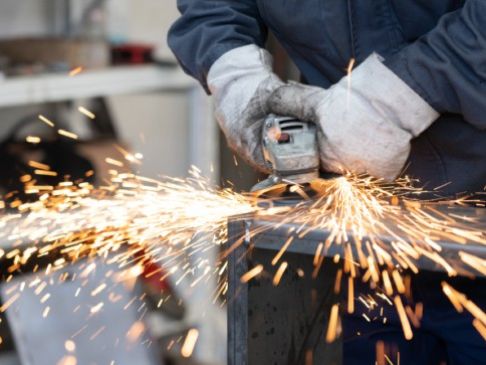
ndustrial furnaces are used globally for a wide range of applications. As the selection of applications grew, different types of furnaces were developed to keep up with demands.
ASHING FURNACES
Ashing furnaces are used to determine the amount of ash that forms after a sample is burned. Typical materials used as samples in ashing furnaces are petroleum products, lubricating oils, and coal.
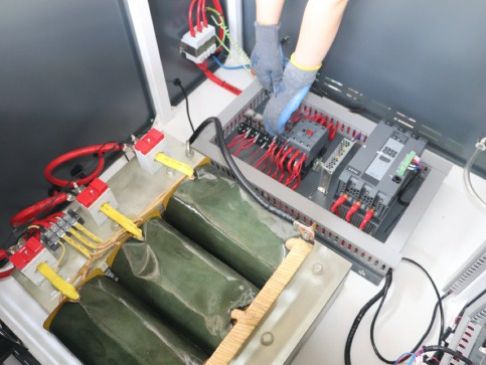
Our furnaces can be used in high-temperature tempering, annealing, quenching and other
Get A Free Quote

Submit Request