Time:
This article provides a systematic overview of the technical principles, structural characteristics, and application fields of precision atmosphere furnaces. By precisely controlling the atmosphere composition and pressure within the furnace, the equipment enables heat treatment processes that are free from oxidation and decarburization. It is suitable for high-end applications such as ceramic sintering, metal powder metallurgy, and the annealing of semiconductor materials. Key advantages include excellent temperature uniformity, rapid atmosphere switching, and energy efficiency/environmental friendliness, making it a critical thermal processing tool for both laboratory and industrial production.
I. Introduction
With the rapid advancement of new material technologies and precision manufacturing processes, requirements for atmosphere control during heat treatment have become increasingly stringent. Conventional heat treatment in an air environment
often leads to surface oxidation, decarburization, or compositional contamination, severely compromising product performance. Atmosphere furnaces emerged to address this, creating a controlled protective or reactive atmosphere within the chamber to provide an ideal environment for material heat treatment. This article offers a comprehensive analysis of precision
atmosphere furnaces, covering four dimensions: technical principles, structural characteristics, application scenarios, and selection criteria.
II. Working Principles and Core Technologies
The core function of an atmosphere furnace is the coordinated control of gas composition, flow rate, pressure, and temperature within the chamber. The operational workflow is as follows: first, the workpiece is placed into the sealed chamber, and air is evacuated via a vacuum pump system; next, a preset process gas (such as high-purity nitrogen, hydrogen, argon, or a gas mixture) is introduced, and a constant slight positive pressure is maintained using gas flow controllers; heating elements operate according to a programmed heating curve, with thermocouples providing real-time temperature feedback to a PID controller to achieve temperature control precision within ±1°C;
finally, exhaust gases are discharged after undergoing combustion or purification treatment.
Key technical specifications include:
· Atmosphere uniformity: Employs a multi-point gas inlet and airflow circulation design to ensure that variations in atmosphere composition across different zones of the furnace remain below 5%.
· Gas tightness: The furnace body features a double-layer water-cooled structure and silicone rubber seals, achieving a leakage rate of less than 1.33 × 10⁻⁵ Pa·m²/s.
· Temperature range: Standard models operate between 600°C and 1800°C, with a maximum capability of 2200°C (using molybdenum wire heating).
· Heating/cooling rates: Programmable control from 0 to 20°C/min, meeting the requirements of various process curves. III. Typical Structural Design
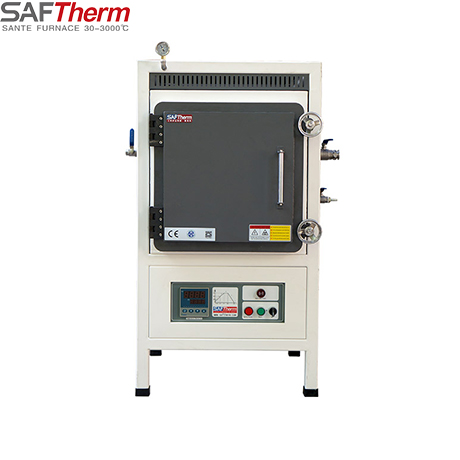
1. Furnace Body System: Features a carbon steel or stainless steel outer shell and a lining of refractory fiber or corundum-mullite bricks; the insulation layer is ≥200 mm thick, effectively reducing energy consumption.
2. Heating Elements: Heating elements are selected based on the operating temperature range—resistance wire (≤1000°C), silicon carbide rods (≤1400°C), or molybdenum disilicide rods (≤1800°C)—arranged either circumferentially or as flat radiating panels.
3. Atmosphere Control System: Includes mass flow controllers (MFCs), solenoid valves, pressure sensors, and gas mixers; supports automatic switching and proportional regulation for 2 to 4 gas lines.
4. Safety Protection: Equipped with a hydrogen concentration alarm, explosion-proof pressure relief port, low water pressure protection, and an automatic over-temperature power-off device to ensure safety when using flammable gases.
IV. Key Application Areas
1. Advanced Ceramic Sintering
Ceramic materials such as alumina, zirconia, and silicon nitride require sintering in oxygen-free or reducing atmospheres to prevent grain boundary oxidation and promote densification. Atmosphere furnaces can control the partial pressure of oxygen to below 10⁻³ Pa, achieving a relative sintered density of over 99%.
2. Powder Metallurgy and Metal Heat Treatment
Processes include debinding, reduction, and vacuum sintering for cemented carbides and stainless steel powders; and bright annealing and quenching for high-speed steel and die steel, ensuring no surface decarburization and hardness uniformity within ±0.5 HRC.
3. Semiconductor and Electronic Materials
Processes such as silicon wafer diffusion, annealing of sapphire substrates for LEDs, and co-firing of LTCC substrates require environments with extremely low impurity levels. High-vacuum atmosphere furnaces can achieve a base vacuum of 6.67 × 10⁻⁴ Pa; combined with high-purity argon gas protection, they meet microelectronics industry standards.
4. New Energy Materials
Solid-state synthesis of lithium-ion battery cathode materials (e.g., lithium iron phosphate) and carbonization of bipolar plates for hydrogen fuel cells must be performed in nitrogen or nitrogen-hydrogen mixed atmospheres; atmosphere furnaces offer precise control over gas mixing ratios and flow stability. V. Technical Advantages and Selection Recommendations
Summary of Advantages:
· Eliminates oxidation and decarburization, increasing product yield by 15%–30%
· Rapid atmosphere switching response (reaches set concentration within ≤30 seconds)
· Intelligent program control; capable of storing over 30 process curves
· Energy consumption reduced by approximately 20% compared to traditional pit furnaces
Key Selection Parameters:
1. Furnace Chamber Volume: Laboratory (3–30 L), Pilot-scale (50–200 L), Production-scale (300 L+)
2. Maximum Temperature: Set 100–200°C above the material melting point and process temperature
3. Atmosphere Type: Inert (Ar, N2), Reducing (H2, CO), Oxidizing (O2, air), or Corrosive (Cl2, etc.; requires special inner liner)
4. Vacuum Level Requirements: Atmospheric/slight positive pressure, low vacuum (10–10² Pa), or high vacuum (10⁻⁴–10⁻¹ Pa)
5. Cooling Method: Natural cooling, circulating water cooling, or forced air cooling
VI. Conclusion
As a core component of modern thermal processing equipment, the precision atmosphere furnace has demonstrated proven technical maturity and reliability in sectors such as advanced materials, electronic components, and aerospace. When selecting a furnace, users should comprehensively consider process temperature, atmosphere purity, production efficiency, and safety standards. Priority should be given to manufacturers who provide airtightness test reports, temperature uniformity test data, and comprehensive after-sales service. Driven by Industry 4.0 advancements, the next generation of intelligent atmosphere furnaces—integrating remote monitoring, process data traceability, and AI-based temperature control algorithms—will undoubtedly deliver more efficient and cleaner solutions for precision heat treatment. If you are interested in atmosphere furnaces, please contact SAFTherm; we are ready to provide you with optimal industrial heat treatment solutions.
Related News
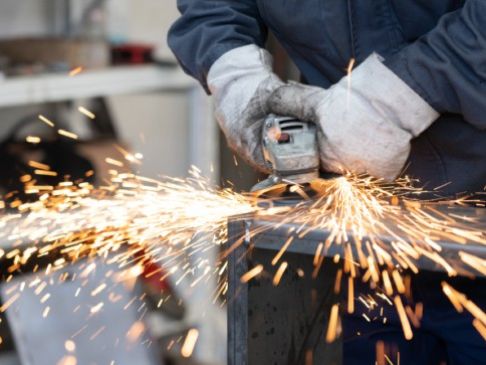
ndustrial furnaces are used globally for a wide range of applications. As the selection of applications grew, different types of furnaces were developed to keep up with demands.
ASHING FURNACES
Ashing furnaces are used to determine the amount of ash that forms after a sample is burned. Typical materials used as samples in ashing furnaces are petroleum products, lubricating oils, and coal.
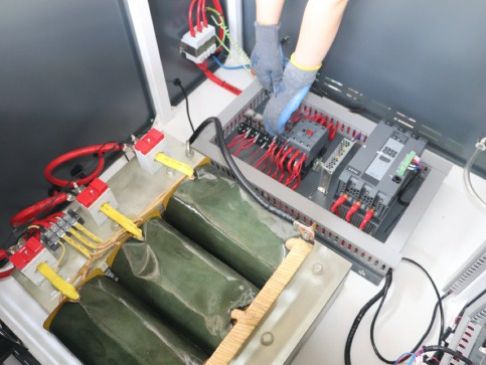
Our furnaces can be used in high-temperature tempering, annealing, quenching and other
Get A Free Quote

Submit Request