Time:
Specific Test Methods for Temperature Uniformity of Muffle Furnaces
I. Applicable Standards
Reference Standards:
GB/T 10066.1-2021 "Test Methods for Electric Heating Devices", ASTM E3014, IEC 60584, GB/T 28865 Laboratory Muffle Furnace and Box-type Resistance Furnace Temperature Uniformity Test Specification.
II. Mainstream Specific Test Methods
Layout Specifications (General for Cubic Furnaces)
Layout by 9 points/5 points:
5 points: Furnace center + top, bottom, left, right
9 points: Top 4 corners + bottom 4 corners + center
Testing Procedure
Unloaded state, heat to the rated set temperature;
Maintain constant temperature for 30-60 minutes to reach thermal steady state;
Simultaneously collect real-time temperatures of all thermocouples;
Calculation: Maximum temperature - Minimum temperature = Temperature field uniformity deviation.
Advantages: Low cost, simple operation, essential for industrial mass production;
Disadvantages: Can only measure discrete points, cannot reflect the overall temperature gradient.
Method Description: Connect an external multi-channel temperature monitoring instrument/paperless recorder, connect multiple K/S type high-temperature resistant thermocouples, and automatically and continuously sample and record the temperature curve.
Features
1. Continuous monitoring for extended periods (1h/2h), capturing the uniformity of temperature throughout the heating, isothermal, and cooling processes, automatically generating reports, suitable for type testing.
2. Temperature Field Plate Test Method (High-Precision Calibration)
Principle: Uses a high thermal conductivity uniform temperature test plate (stainless steel/ceramic plate) with multiple temperature probes pre-embedded on its surface, placed in the furnace working area.
Applications: Small laboratory muffle furnaces, precision annealing furnaces, and ash content testing furnaces, used to detect the temperature uniformity of the working surface.
3. Temperature Cone/Ring Method (Low-Cost On-Site Comparison Method)
Principle: Utilizes the shrinkage, softening, and deformation of ceramic temperature rings and cones at high temperatures, comparing them with a temperature rating table to determine regional temperature differences.
Operation: Place multiple sets of temperature rings at the front, middle, back, left, and right of the furnace. After sintering, compare the deformation to determine hot and cold zones.
Advantages: No wiring or instruments required; rapid on-site sampling in the workshop.
Disadvantages: Low accuracy; only qualitative analysis is possible, not quantitative analysis. 5. Temperature-Indicating Paint/Thermosensitive Coating Method (Full-Area Visualization)
Principle: An irreversible temperature-indicating coating is applied to the surface of a high-temperature resistant substrate. The substrate is then placed in a muffle furnace and heated. The distribution of high-temperature and low-temperature zones is visually observed through the color-changing boundary lines of the coating.
Application: Observing furnace dead zones, furnace door heat leakage, and heating element layout defects during the R&D and design phase.
Principle: Using simulation software such as Fluent and ANSYS, models of the muffle furnace chamber, heating elements, and insulation layer are established. Temperature and flow fields are numerically simulated to predict uniformity and optimize the structure.
Application: Temperature field analysis can be performed without a physical prototype for new product structural design and heating arrangement optimization.
Principle: Standard samples of the same specifications are placed at the front, back, left, right, and center of the furnace chamber and heat-treated at the same temperature and time. Temperature uniformity is inferred from differences in weight loss, ash content, and hardness.
Applicable to: Coal ash content, material sintering, and heat treatment process compliance verification, closely simulating actual operating conditions.
Detailed Procedures for Muffle Furnace Temperature Uniformity Test Standard
I. Pre-Test Preparation
Equipment and Instrument Preparation
The muffle furnace to be tested is in good working order, with temperature control instruments and heating elements functioning normally;
5 or 9 calibrated high-precision K/S type thermocouples;
Multi-channel temperature monitoring instrument/paperless recorder;
High-temperature resistant thermocouple leads and heat-insulating mounting brackets.
Environmental Conditions
Ambient temperature: 15~30℃, no strong convection vents, no direct sunlight;
Sufficient ventilation space is provided around the furnace body, with no obstructions.
Furnace Pretreatment
Clean debris and residual samples from the furnace chamber;
Unloaded state, close the furnace door, and allow to cool and stand for later use.
II. Thermocouple Point Layout (Standard 5-Point/9-Point Method)
Layout within the effective working space:
1 at the geometric center of the furnace
1 each at the top, bottom, left, and right of the working area
Thermocouple probes are suspended and fixed, not touching the furnace wall or the insulation layer.
Requirements: All thermocouple probes must be at the same height, suspended, and the leads must be smoothly led out from the furnace door gap, without squeezing or causing heat dissipation interference with the measuring points.
III. Heating and Temperature Stabilization
Set the target test temperature (commonly selected: 500℃, 800℃, 1000℃, 1200℃, or multiple points);
Start the muffle furnace program to heat up to the set temperature;
After reaching the set temperature, maintain temperature stability for 30–60 minutes (≥60 minutes for high-temperature furnaces), until the temperature fluctuation at each measuring point is ≤±1℃, entering a thermal steady state.
IV. Data Acquisition and Recording
Turn on the multi-channel temperature monitoring instrument to simultaneously and continuously acquire the temperature of all measuring points;
Record one set of data every 10–30 seconds, continuously recording for 30 minutes;
Keep the furnace door tightly closed throughout the process; do not open the door or disturb the measuring points during the process.
V. Data Calculation and Uniformity Determination
Extract effective temperature data from all measuring points during the steady-state phase;
Identify the highest and lowest temperatures within the steady-state range;
Temperature uniformity calculation formula:
Temperature uniformity deviation = Tmax - Tmin
Record the average temperature, maximum deviation, and fluctuation range at each point to generate a test report.
VI. Retesting under Different Operating Conditions (Optional)
Comparative tests can be performed under no-load, half-load, and full-load conditions;
Tests can be conducted separately for low temperature, medium temperature, and rated high temperature zones;
After testing, allow the temperature to cool naturally, tidy up the thermocouples, and restore the furnace to its original state.
VII. Key Points for Testing (Critical Quality Control)
Thermocouples must be calibrated beforehand to avoid sensor errors;
Measuring points must not come into contact with the furnace lining or heating wires to prevent localized thermal interference;
The holding time must be sufficient; readings are not permitted until steady-state conditions are reached;
Do not open doors during the test to avoid environmental airflow disturbances;
Exposed leads should be insulated to reduce heat dissipation errors.
Partner with SAFTHERM Furnace for laboratory heating equipment and high-temperature heat treatment equipment
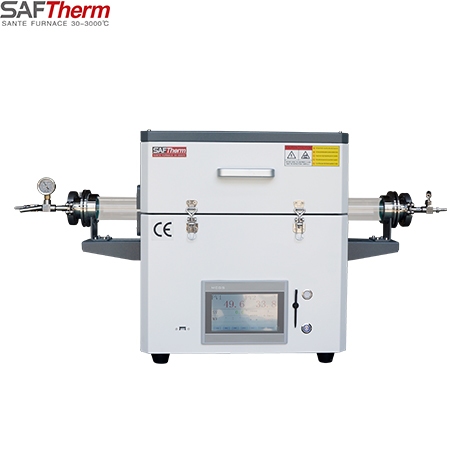
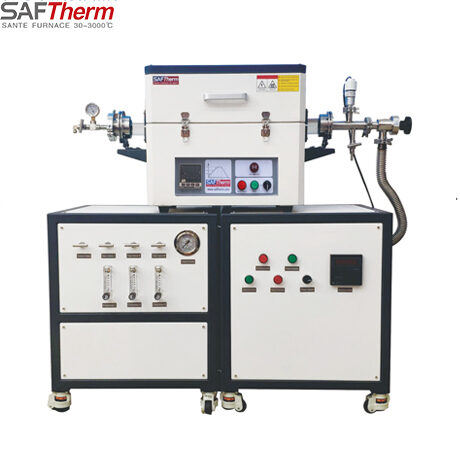
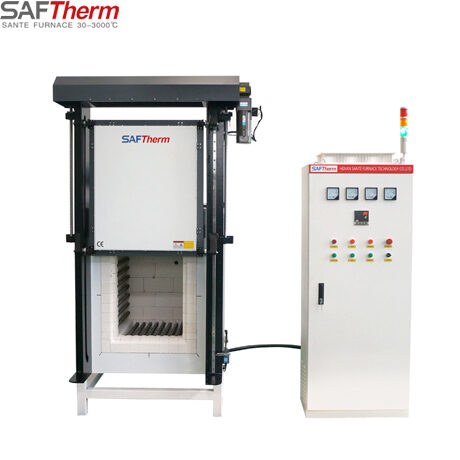
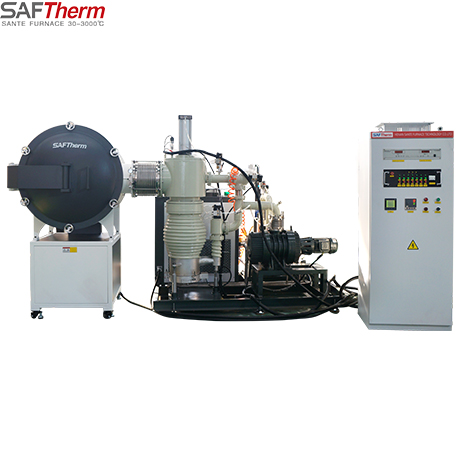
With over 20 years of experience in the heating equipment industry, Henan Saftherm Technology Co., Ltd. designs, manufactures, and develops high-quality laboratory and industrial heating equipment. Our engineering team of over 10 experts collaborates with clients to develop optimized heating equipment solutions to meet their unique operating conditions. We offer heating equipment and technical solutions including 1200°C, 1400°C, 1700°C, and 1800°C muffle furnaces, industrial furnaces, tube furnaces, ceramic degreasing furnaces, lifting furnaces, bogie hearth furnaces, atmosphere furnaces, and vacuum furnaces. The company is ISO9001 quality system certified, holds CE certification and SGS factory certification, and possesses over 30 invention patents. We provide laboratory heating equipment and high-temperature heat treatment equipment and technical services to numerous industries, including universities, research institutes, factories, petroleum, petrochemical, metallurgy, casting, machinery manufacturing, and military industries, while maintaining competitive pricing.
You can contact our technical team at [email protected] to discuss your technical needs. We offer comprehensive support, including application engineering, customized design services, and detailed product specifications to help you make informed purchasing decisions. You can browse our complete product list at www.saftherm.com.
References:
1.ASTM E3014-15. Standard Test Method for Temperature Uniformity of Laboratory Furnaces. ASTM International, 2015.
2.IEC 60584-2:2019. Thermocouples – Part 2: Tolerances. International Electrotechnical Commission, 2019.
3.Holman J P. Experimental Methods for Engineers, 8th ed. McGraw-Hill, 2019. (Chapter: Temperature Measurement and Furnace Calibration)
4.Lenz E, et al. Temperature uniformity testing and calibration of high-temperature muffle furnaces. Journal of Thermal Analysis and Calorimetry, 2018, 134(2): 987-995.
5.Smith R, Johnson M. Evaluation of multi-point thermocouple mapping method for industrial box furnace temperature uniformity. Measurement Science and Technology, 2020, 31(7): 075102.
Related News
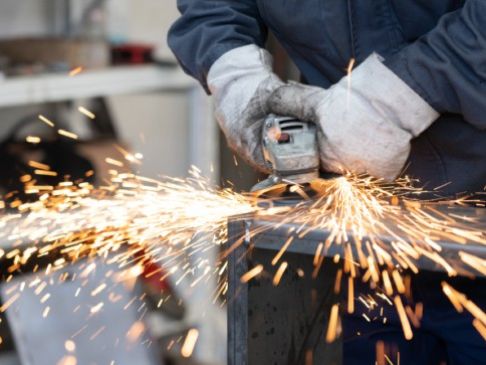
ndustrial furnaces are used globally for a wide range of applications. As the selection of applications grew, different types of furnaces were developed to keep up with demands.
ASHING FURNACES
Ashing furnaces are used to determine the amount of ash that forms after a sample is burned. Typical materials used as samples in ashing furnaces are petroleum products, lubricating oils, and coal.
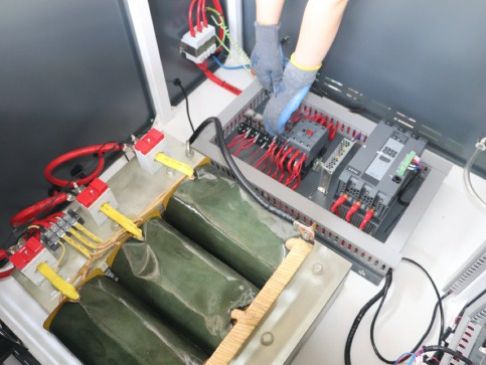
Our furnaces can be used in high-temperature tempering, annealing, quenching and other
Get A Free Quote

Submit Request